Bi-monthly festival showcasing the best of POLITICAL films from around the world today.
Author: festivalforromance
Festival driven to showcase the best of romance films and screenplays from around the world. Submit your romance genre screenplay or short film and get it showcased at the FEEDBACK Film Festival
“A critical election in Florida intersects with the opportunity for real freedom in Cuba.”
Logline: When the smart and beautiful daughter of a wealthy Cuban refugee (the most powerful conservative voice in Florida) becomes a U.S. Senator, she works cleverly and clandestinely to defy both her father and accepted political precedent to abolish the U.S. Embargo.
Story protagonist, Alice, admires legendary lawman Bass Reeves, a former slave who became a great lawman of the late 1800s. Single mom and attorney, Alice, struggles with the police injustice she sees on the streets and fights for justice with her knowledge of the law and the use of her cell phone.
CAST LIST:
Narrator: Val Cole
Alice: Kyana Teresa
Chris/Steve/Jim: Allan Michael Brunet
Cora: Hannah Ehman
Robert/Sam: Steve Rizzo
———
When a misplaced border wall throws his honky-tonk into no-man’s land, Shady establishes a new kingdom to offer folks a second chance, but powerful politicians have other ideas.
CAST LIST:
Narrator: Elizabeth Rose Morriss
Santos: Steve Rizzo
Shady: Geoff Mays
Landry: Sean Ballantyne
—–
AUDIENCE AWARD WINNERS:
Best Short Film: LA MARELLE
Best Performances: DREAMER
Best Cinematography: POST-ELECTION WORKS
Best Direction: GEORGE FLOYD: SAY THEIR NAME
Best Sound & Music: THE STORY OF LILY CHEN
Theme of night: Life
NOTE: Festival took place during the COVID-19 virus lockdown so all screenings were held in private.
Sgt. Robin Sole wakes up to find herself trapped with six strangers in a deadly game of racism and torment. Can the seven strangers overcome their personal differences to come together and escape or will they take their personal prejudice to an early grave?
CAST LIST:
Narration: Elizabeth Rose Morriss
Robin: Kyana Teresa
Nijah: Hannah Ehman
Nox Yang is an LA-based filmmaker, a current undergraduate student in UCLA’s film and sociology departments. Growing up in China and receiving higher education in the United States, she has a focus on racial, gender, sexual, social justice issues, and has participated in making documentaries that feature Japanese American WWII internment camp survivors, formerly incarcerated African American women, sexual trafficking survivors in Hollywood #Metoo movement, etc.
This current film The Story of Lily Lee Chen, a story about a minority woman breaking into American mainstream politics in the 1980s, is her directorial debut. Her goal is to use storytelling to amplify the voice of the minority, empower the marginalized, promote justice and a greater understanding across different cultures and communities.
Director Statement
In early 2020, I started a campaign to run for International Student Representative as the first Chinese candidate in UCLA’s history.
As you can see, I came to the United States in 2018 dreaming to live in “the land of the free” but only found myself, an Asian female at the age of 18, become the minority here, along with many other people who have also been disappointed and alienated by this land – especially with the COVID-19 and the exacerbated anti-Asian sentiment, racism, and xenophobia.
Driven by the urge to speak for my community, I decided to run for that position. But it was not easy for a foreign student and a novice in political campaigns. Crippled by my lack of knowledge and experience in this American game, I lost.
A few weeks after my failed attempt, I was introduced to Lily Lee Chen through a mutual friend and was shocked to hear about her story – another foreign student who came to this country almost 60 years ahead of me, worked hard to become a US citizen, ran for office, and actually WON. However, despite having achieved incredible success as a minority woman, she experienced racial and gender prejudice no differently than I did, and fought relentlessly to combat it.
It was then I knew I wanted to tell Lily’s story.
I want her story to be a reminder: what America used to be, how it has attracted countless people like Lily and me with its promises, how much the generations before us have done to get closer to those ideals, and how it is our responsibility, as the younger generation, not to let them down.
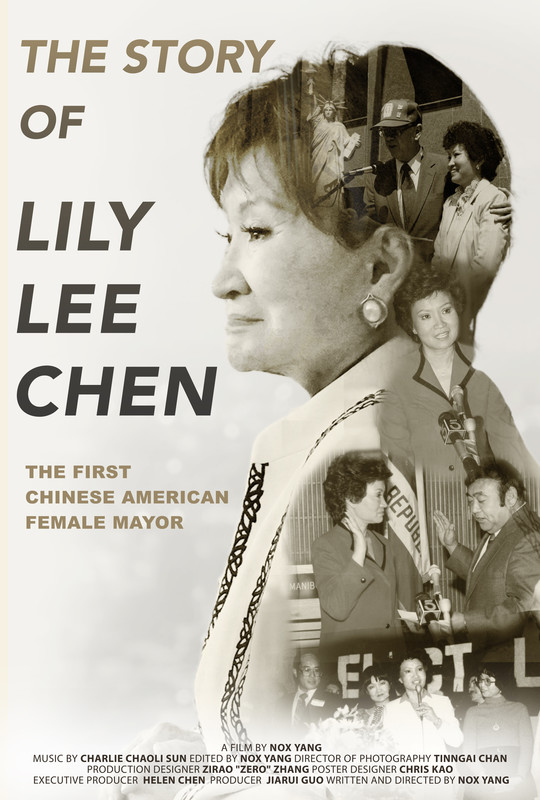
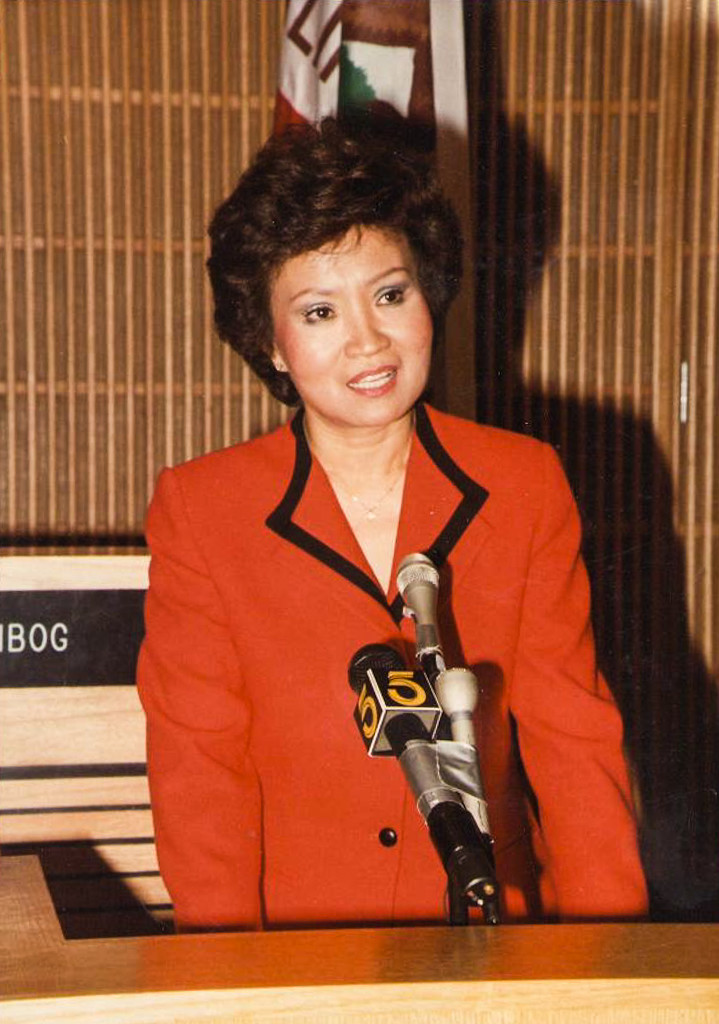
Retired politician Lily Lee Chen recalls her experiences of becoming the first Chinese American woman mayor and fighting against the anti-Asian/anti-immigrant sentiment in the 1980s.
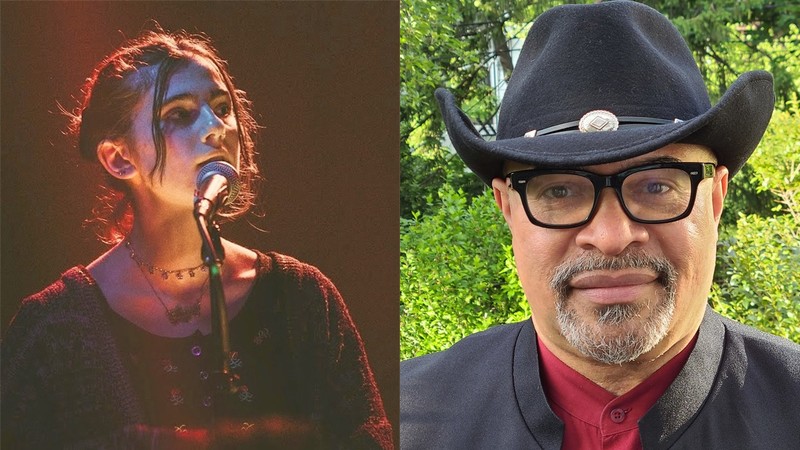
Alyssa Dann was a quiet and reserved child raised in a very musical household. Her father is a highly-regarded bass and guitar player and her mother is a singer. For Alyssa, music has always been her voice. She started lessons at the age of five and songwriting by seven. By 13, Alyssa was playing bass on her father’s gigs at clubs in New York City. Fast forward to 2018, and Alyssa, while still in high school, was performing in New York City and Boston and releasing her own recordings.
During high school, Alyssa was introduced to the power of storytelling through film. She directed, filmed, and edited two of her own music videos, and fell in love with video editing. In a “Media as Service” program with Woodstock Travels, she visited India and Nepal, working with NGOs to create promotional content. After high school, she taught video editing and recording media arts to 8th Grade kids — in her old classroom!
Alyssa’s decision to direct and edit “George Floyd: Say Their Names” during her transition to college has opened her eyes and changed her life — and she is not looking back.
Alyssa recently started attending Sarah Lawrence College (US-NY), Class of 2024, and sees herself majoring in Psychology, Public Health and Music.
CHRISTOPHER R. OWENS / CHRIS OLEDUDE
As a singer-songwriter and performer, Chris Owens has been musically active for nearly 55 of his 62 years. He studied piano, cello, recorder, and African drums, and also sang in numerous choruses. Owens had been in bands and school musicals, but no videos or films.
With a family to support and a career to sustain, Chris Owens put his passion for music aside until his father, Nelson Mandela and family friend Pete Seeger all passed within three months of each other between October, 2013 and January, 2014. As a result, Chris and his two brothers formed OBB – The Owens Brothers Band and started performing original music live. Then, in 2017, Chris’ wife was diagnosed with cancer … and music was again put on hold.
In 2020, a year after Sandra’s death and at the start of the COVID pandemic, Chris Owens decided to create the artist known as CHRIS OLEDUDE to serve as the full outlet for his creative energy and the burning desire to speak out during challenging times. Focused on music, Owens never really thought about “videos”. He really knew nothing about video production or editing.
Chris Owens founded CESO ENTERPRISES, INC. in May, 2020 to manage the work of CHRIS OLEDUDE and the intellectual property past, present and future from Chris and his two sons. On June 14, 2020, Owens recorded the vocal tracks for the song “George Floyd”. During that session, studio musicians, singers, and the recording engineer’s young daughter gathered outdoors around three microphones to record the chants heard in the song. That young woman was Alyssa Dann, then a high school senior, who also served as the “voice over” towards the end of the video. Alyssa is a singer-songwriter herself and was so inspired by the song, that she asked Owens if she could work on a video for the song. And Owens consented.
The result was an inter-generational, cross-cultural, and geographically diverse urban/rural relationship. Owens had worked in local politics for a few years, including campaign management. He had overseen production of some short videotaped candidate messages for voters, but never a musical production. Dann had worked on high school video projects and her own music videos. But this video was much more complex and nearly seven minutes in length.
Between June and October, Owens’ company, CESO ENTERPRISES, INC., produced the video, “George Floyd: Say Their Names,” with Owens and Dann co-directing and Dann handling the editing. Owens had a small singing role, and singer Wendy Ward had the lead role, along with the community church-based Angels of Transformation Dancers.
The production was “low-budget,” technically challenging, and emotionally draining. But, in the end, everyone involved with “George Floyd: Say Their Names” was moved by the experience. Now, audiences are moved as well.
Director Statement
CHRIS OLEDUDE:
The murder of George Floyd focused attention on police brutality against people of color, and racism in general, in a way that few moments have in American history. As an artist, I had to speak out in my way, right away, because I was just as angry as everyone else.
We need stability and a focus on “people first” in order to rejuvenate our nation! If you know economic justice, you will know peace. If you know health care justice, you will know peace. If you know education justice, you will know peace. If you know fair and equal justice under the law, you will know peace. If you know human and civil rights, you will know peace. And, as one of humankind’s most powerful communication tools, music brings us closer to feeling these issues in our bones and saving our collective soul.
I was also blessed and honored by the strong interest of the talented Alyssa Dann in making the video. GEORGE FLOYD: SAY THEIR NAMES is a unique statement in large part because Ms. Dann brought the energy and perspectives of younger people to the project — as well as her excellent aesthetic sense.
It is a tribute to her commitment and fortitude that Alyssa was able to complete her good work on her first ‘professional’ video while simultaneously starting her freshman year at Sarah Lawrence College during the COVID pandemic here in New York State. I don’t know if I could have done that.
ALYSSA DANN:
When I was a background vocalist for the Chris Oledude song, “George Floyd,” I was caught up in the passionate frustration and determination embedded in the music. In the aftermath of the recording session, I kept visualizing aspects of the song. I knew I wanted to create this video. When I asked Chris for the opportunity to do this, he gave me a strange look, but he agreed right away and we embarked on a wild journey into unknown territory. After all, we are both strong-willed songwriters. What could be more perfect, right?
As we completed “George Floyd: Say Their Names,” however, it became so clear that we had created something special — more of a short film than a simple music video — more of an “experience” than a “moment.” When someone whispered the phrase “film festivals,” we paused and agreed to explore some more. Wow! Neither Chris nor I had any idea that there was a world of music video and short film festivals where GEORGE FLOYD: SAY THEIR NAMES could be shared. Now, we are truly grateful for the opportunity to be part of these events.
When will the “last” time be the LAST time? Chris Oledude’s single “George Floyd” has now been re-presented in the powerful video, “George Floyd: Say Their Names.” America’s struggle for equality and fairness throughout law enforcement parallels those struggles faced by minority groups in every society where the majority feels empowered to disregard civil and human rights. The powerful protests that erupted worldwide after George Floyd’s murder in May, 2020, are celebrated here. The enduring power of Black women as determined healers of a torn community is celebrated here. The victims had names. We honor their lives by saying their names. The pressure for change must continue. No justice? No peace!
Kate Haug is an artist living in San Francisco, California. In her work, she investigates history – its presentation and consumption. Her practice explores the circulation of information through ephemera, popular culture and historical documents, re-contextualizing and refiguring archival material to examine contemporary issues. She enjoys making her own ephemera and its anonymous distribution into public spaces. Her short films have screened internationally and include “Pass,” New Directors/New Films 1997, and “Deep Creep,” London International Film Festival 1999.
Director Statement
“Post-Election Works” is a very personal project for me. It is hard to know oneself when assumptions about your government become upended and irrelevant. When I first conceived of the film, it was much more about Walter Benjamin; I felt a parallel to his experience. He was an intellectual and a chronicler of modern culture, writing about history as a non-linear, unstable form. In his book, “Moscow Diary,” Benjamin’s journal entries describe the rise of Stalin from a unique vantage point; he was a foreigner, hosted by actors, leftists and academics, privy to their political debates about Stalin and the changing communist party. Twenty-four years later, pursued by Nazis, Benjamin committed suicide. Throughout his lifetime, Benjamin witnessed the rise of Western dictators, continuing his work as a philosopher and critic. The question of how intellectuals and artists function within a context of political turmoil is compelling to me and structures much of this piece.
Production Notes: Post-Election Works is an essay film constructed of digital fragments, narrated by the artist as she examines her identity after the 2016 U.S. Presidential election. The use of photographs and video culled from the internet mixed with the artist’s artwork and personal experience create a fragmented, prismatic history where the individual becomes the witness, the activist and the subject.

 POST-ELECTION WORKS, 17min., USA, Experimental
 DREAMER, 8min., USA, Drama
 LA MARELLE, 3min., France, Drama
 THE STORY OF LILY LEE CHEN, 18min,. USA, Documentary
 GEORGE FLOYD: SAY THEIR NAME, 7min., USA, Music Video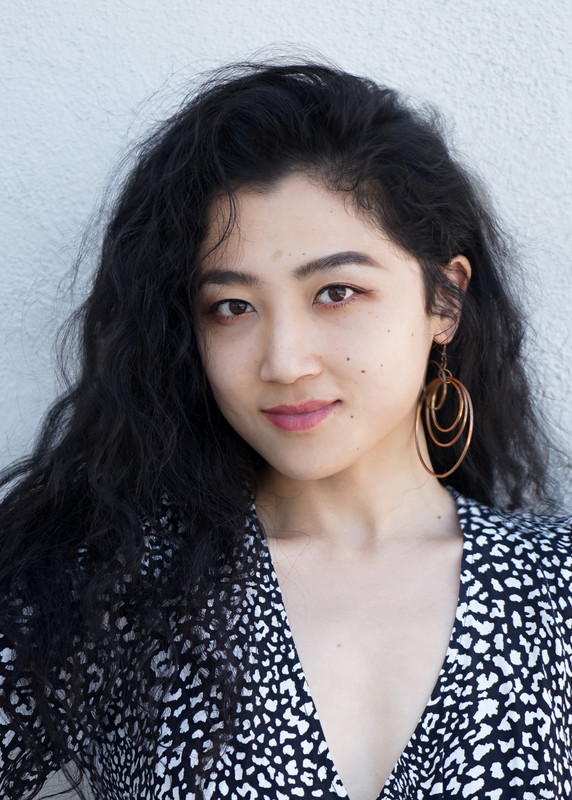




 Political Feedback Festival